This gluten-free Tabouli Salad is made with quinoa and parsley. It’s the most popular Lebanese salad and can be preserved by fermentation.
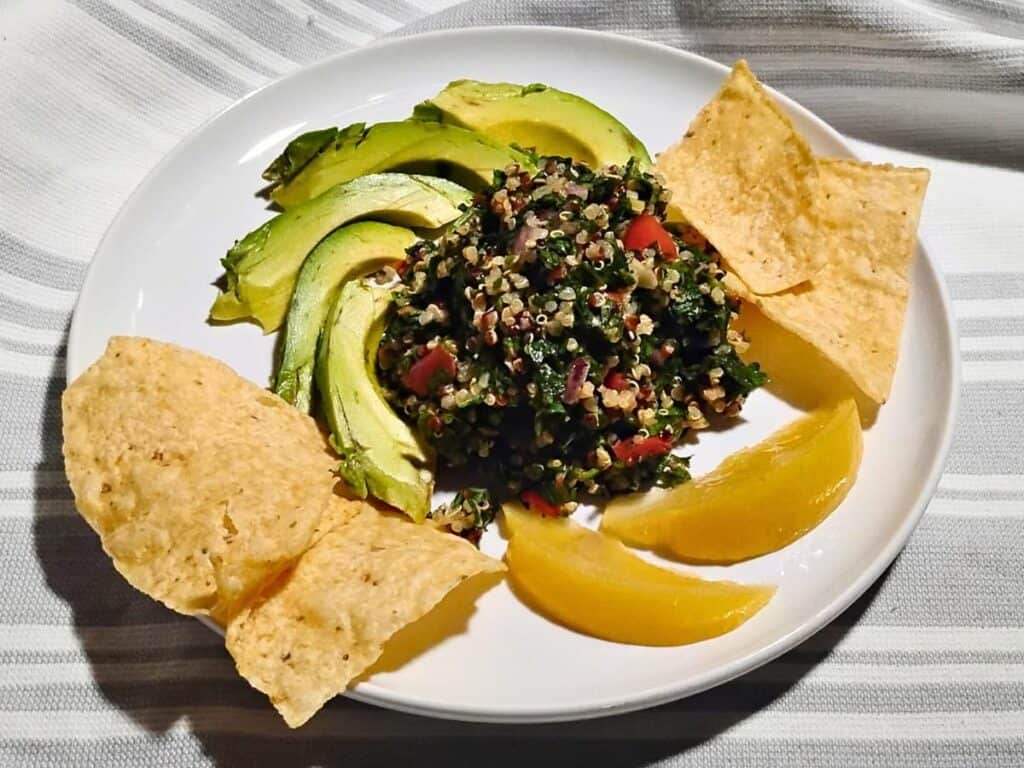
If you’ve never had tabouli salad (tabbouleh salad), you’re in for a treat. This is a delicious and fresh tasting side dish or condiment but it can easily be a full meal with extra protein added. Traditionally made with fine or coarse bulgur, I prefer using Quinoa. This also makes the dish gluten-free, adds a complete protein to make it a meal, and quinoa is easy to grow in your garden.
I am not on a gluten-free diet, but I do love using nutritious seeds in place of grains sometimes. And it is important to me to use homegrown foods and to make each meal count for nutrition and health without sacrificing flavor. This salad aligns perfectly with these goals.
I think you’ll love tabouli salad, it’s been a favorite of mine since I first made it about 35 years ago. I bet it will take a place on your favorite list as well. Let’s make a batch!
If you like this recipe, try some of my other vegetable recipes. German Creamy Cucumber Salad and Bessarabian Zucchini Ikra, a cooked salad and dip. Here are a few favorite fermented recipes: my popular lacto-fermented salsa, famously healthy sauerkraut, delicious flavor-burst fermented cherry tomatoes, and super tasty fermented coleslaw with beets. Here is how to make homemade mayo with fermented option.
- Gluten-Free Tabouli Salad (Quinoa Tabbouleh) And Fermented Tabouleh
- What is Tabouli, Tabbouleh or Tabouleh?
- Why You’ll Love Tabbouli Salad
- Tips And Substitutions For The Best Tabouli Salad
- How To Make Gluten-Free Tabouli Salad (Quinoa Tabbouleh) And How to Ferment Tabouli
- Your Questions Answered
- Enjoy this Gluten-Free Tabouli Salad (Quinoa Tabbouleh) And Fermented Tabouli
- Other Recipes You Might Like
- Pin This Recipe For Later
- Shop This Post Resources And Shopping List
This post contains affiliate links. As an Amazon affiliate, I make a small commission at no extra cost to you if you make a qualifying purchase. See my full disclosure here.
Gluten-Free Tabouli Salad (Quinoa Tabbouleh) And Fermented Tabouleh
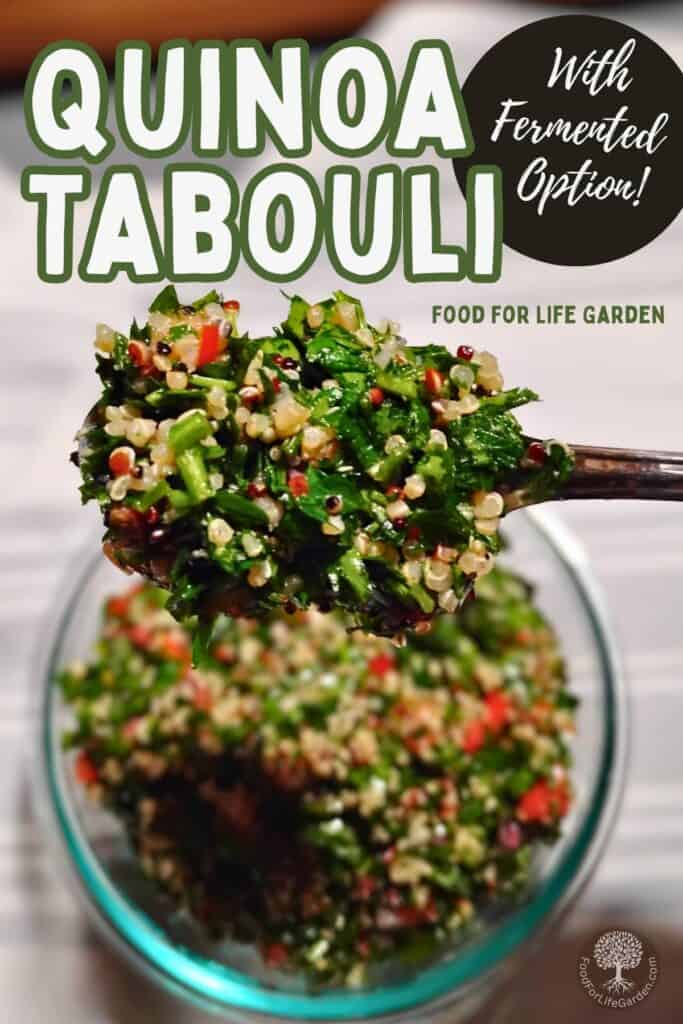
Quinoa Tabouli Salad is one of those meals that you can make with mostly home grown ingredients other than the olive oil, salt, and pepper. It is December here in Southern Missouri and my parsley survived several frosts already and with a light cloth covering is still going after a few nights of 17 degrees. Wow.
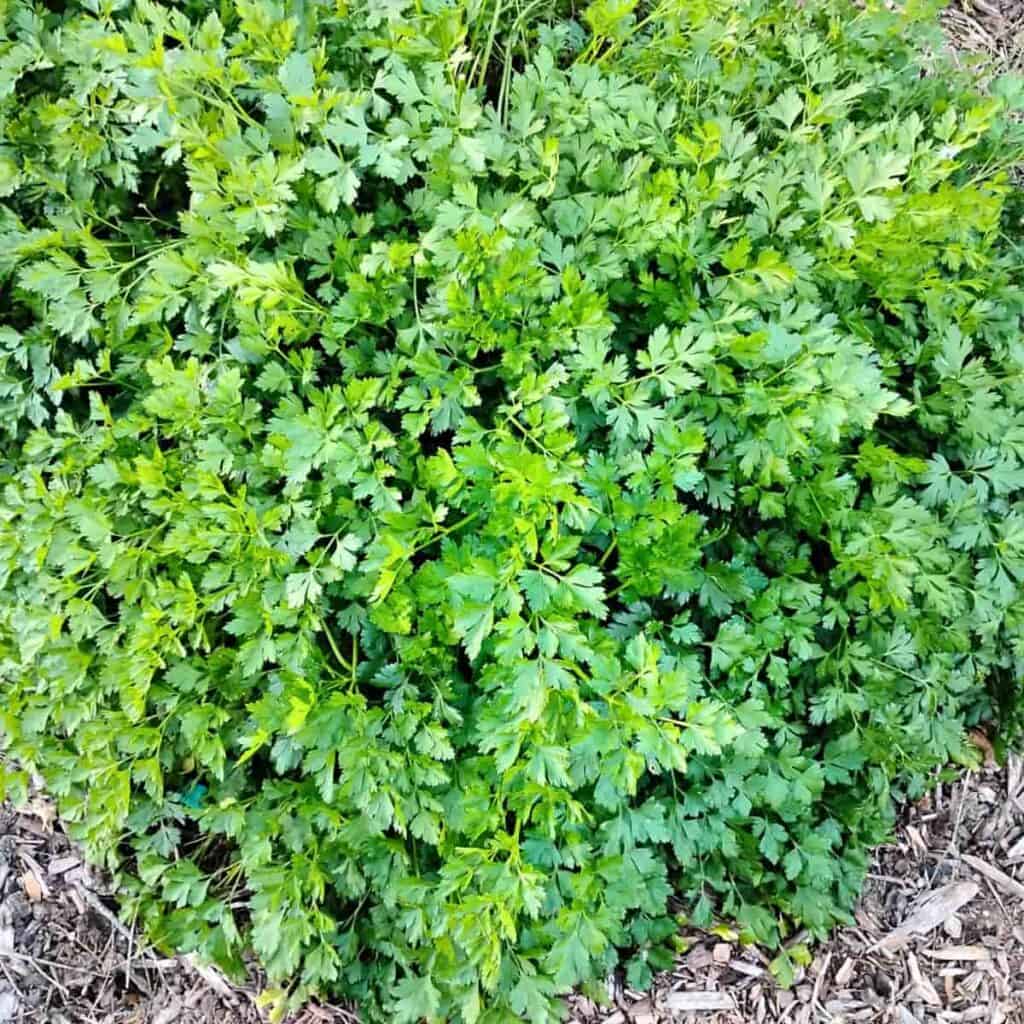
Unfortunately I can’t say the same for tomatoes and most of my stored ones are used up. But I had such beautiful parsley, which I didn’t want to loose to the weather, and after freezing a whole lot of it, and drying a few bunches, I decided that I had to make some tabouli with the rest.
I had a few tomatoes left that I stored inside to ripen. They were not terribly pretty, but still good. And I purchased the Quinoa because I haven’t started to grow it in my new garden here yet. Quinoa is easy to grow though and it’s on my list for next year. And quinoa seeds can be replaced with homegrown amaranth or lambs quarter seeds too.
What is Tabouli, Tabbouleh or Tabouleh?
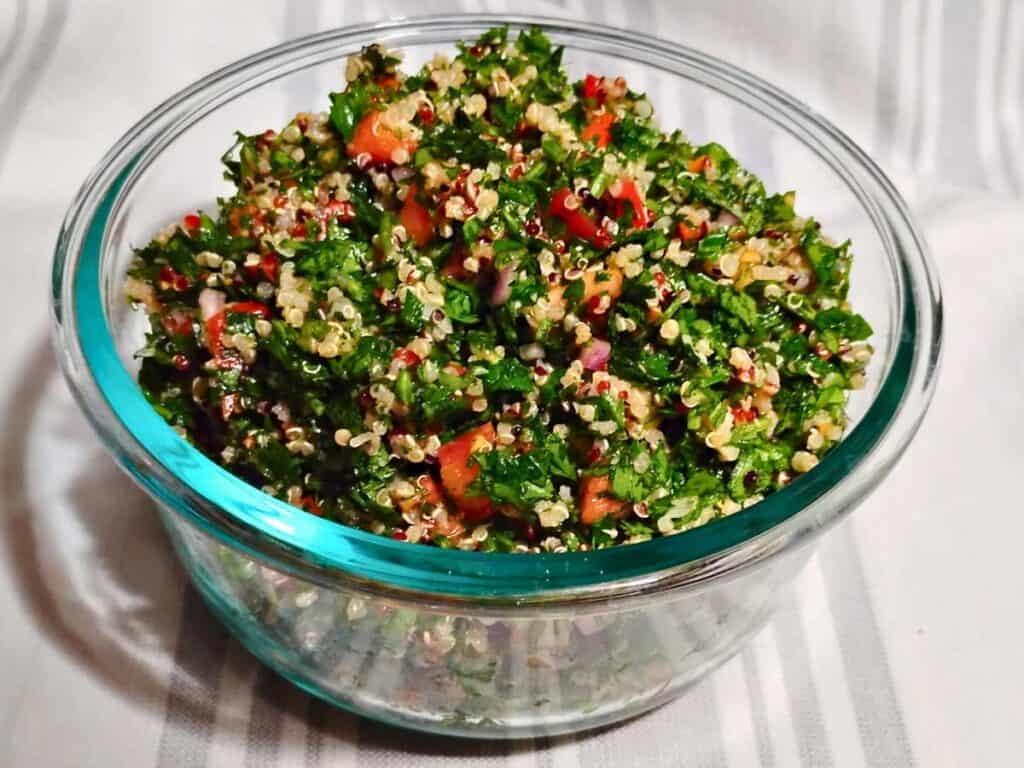
This is a popular salad from the Mediterranean countries, and I think the Lebanese version is the most popular. It generally contains more parsley than other versions. The original spelling appears to be tabbouleh, but tabouli and tabouleh are now more common, but they refer to the same dish.
Traditional Tabbouleh salad is made with lots of parsley, some mint, tomatoes, green onions, and olive oil. This is normally mixed with soaked fine or coarse bulgur wheat.
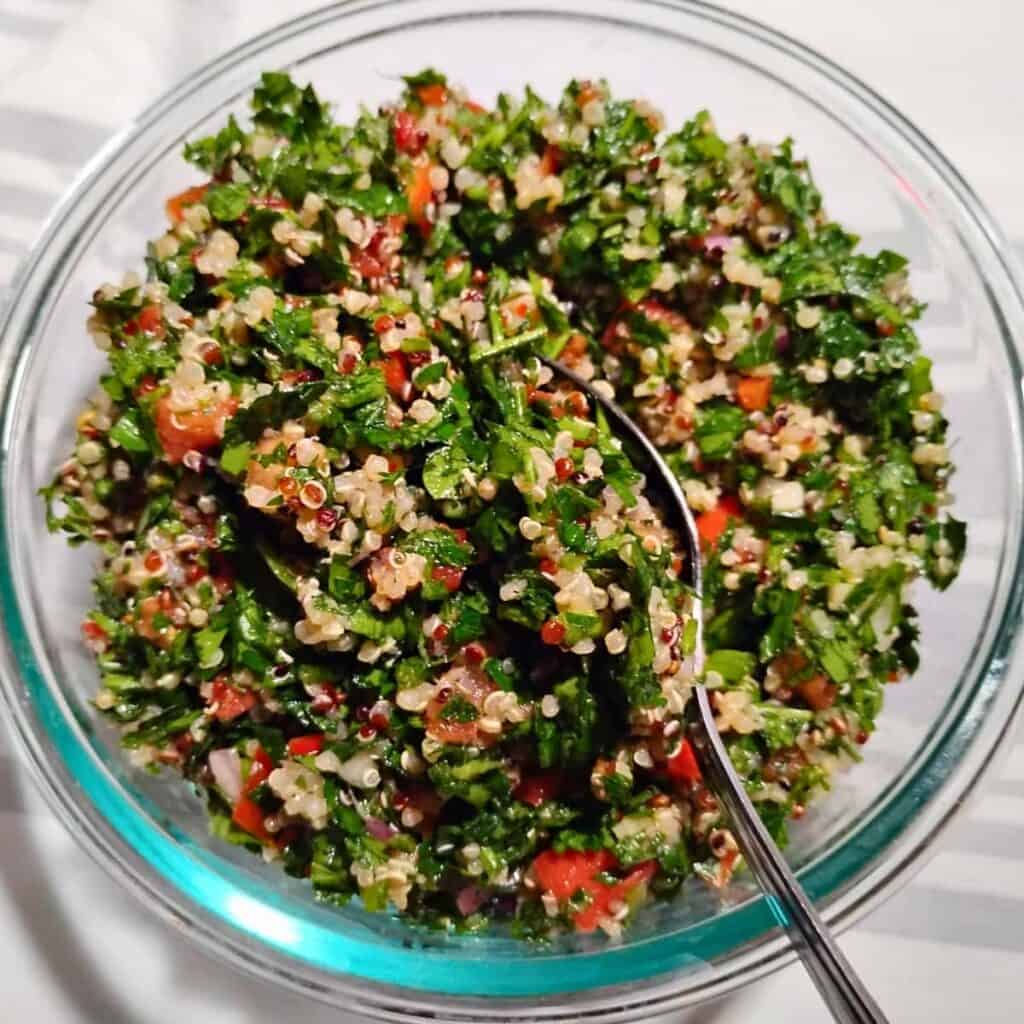
In my recipe, I substitute bulgur with quinoa seeds, which also makes it gluten-free. I also add a little crushed coriander, spicy peppers, and garlic. And since I don’t have green onions now, I used just regular red onions on my last batches.
For the mint I used spearmint (which is pretty cold-hardy too), and a little catmint. You can also use apple mint, pinapple or chocolate mint. Peppermint is not ideal, and if you’re using catmint, don’t overdo it, it can taste a little strong and bitter.
Why You’ll Love Tabbouli Salad
- It tastes fantastic!
- You can ferment it! I love my fermented version. It’s tangy and refreshing. And fermenting is a great way to preserve tabouli, pretty much the only way you can. Fermenting it will even increase its already impressive nutritional profile. And besides increasing the nutrient value, fermenting adds probiotics, and increases the bioavailability of all the nutrients. If you like fermented food, you’ll love this! Instructions are included below.
- It is light, refreshing, and makes a great nutritious snack anytime.
- You can grow most of the ingredients in your garden.
- You’ll love the health benefits of Tabouli Salad. It’s high in nutrition, fiber, and antioxidants. It has anti-inflammatory properties and countless health benefits from each of the ingredients.
- Parsley: The Star of the show in Tabouli salad is rich in Vitamins A,C, and K and loaded with powerful antioxidants. It is known to boost immune health, bone health, reduce bloating and high blood pressure, aid the digestive system, and fight cancer cells.
It has antifungal and antibacterial properties and can fight infections. It can also help lower blood cholesterol and high blood pressure. And it might reduce muscle cramps. Historically it has been used for urinary tract infections and to prevent kidney stones.
This is just to mention a few benefits. The list of parsley’s health benefits is long and I encourage you to read more about it in this scientific paper if you’re interested. Pretty impressive! Sure makes parsley a super potent and healthy ingredient in this tabouli salad. (another source)
- Quinoa: Quinoa (Chenopodium quinoa) is the white, red, or black seed of a plant that is related to swiss chard, beets, and spinach, as well as our native weed, lambs quarters, and amaranth. It is so nutritious that it is used to feed astronauts during longer NASA missions.
This plant stems from ancient Peru and was called the ‘gold of the Inca’. One of the oldest ingredients, domesticated by humans, that we know about. Apparently they used it to increase stamina in their warriors.
Quinoa has been an important plant far back in history, but, until just recently, has not been well known outside of its native Andes region, where it thrives at 10,000 feet elevation. It is called a superfood due to its great nutritional value. It was an important agricultural commodity in its native regions, but in recent years it is also grown in the US, much of it in the Pacific Northwest.
As a seed, quinoa is a concentrated nutrient package. High in amino acids, protein, riboflavin, magnesium, phosphorus, iron, folate, thiamine, and zinc as well as vitamins B and E, phyto-nutrients, and insoluble fiber. It contains a complete protein (all 9 essential amino acids).
Quinoa has antioxidant and anti-inflammatory properties, it is high in flavonoids such as quercitin and kaempherol. It has a low glycemic index and can lower blood sugar. Quinoa is high in omega 3s and fiber, which can help reduce the risk of heart disease and lower cholesterol. (source, source). Wow! That’s a superfood alright. Substitute amaranth or lambs quarter seeds for similar benefits.
- Tomatoes: are packed with nutrients like lycopene, vitamins C & K, potassium, and antioxidants, as well as fiber, and other polyphenols. They can support heart health, vision, and skin health, prevent cancer, and boost immunity. Tomatoes can also support bone health, control blood sugar, and support male fertility. (source)
- Onions: Onions are high in antioxidants such as quercitin and anthocyanins that can fight cancer and inflammation, support heart, liver, and brain health and can help reduce the risk for developing cancer. They support gut health with prebiotic fibers, help regulate blood sugar, support immune and digestive functions and are antimicrobial. (source)
- Mint: Almost all recipes for tabouli include mint. They don’t specify which, but I researched it and found that this normally means spearmint and I found advise to not use peppermint. But Applemint, chocolate mint, or catmint (sparingly) can also be used.
I used spearmint and a little catmint, as both are abundant in my garden and still had green shoots after some frost at the time I made my tabouli salad.
Spearmint will add flavor and more health benefits. It can improve memory and focus, alertness, and attention. It can help with indigestion, bloating, gas, and cramps as well as nausea. It is rich in antioxidants and has anti-inflammatory and anti-microbial properties. It might help with menstrual cramps and can help regulate blood sugar. (source)
- Olive Oil: The benefits of extra-virgin olive oil (EVOO) are widely known. I love olive oil for its awesome flavor, but here are a few health benefits that are no less important: Olive oil contains monounsaturated fats and antioxidants. It can help lower LDL, the bad cholesterol, and protect the heart. It is rich in polyphenols with anti-inflammatory and antioxidant properties to protect from chronic disease risk. It can support brain health, cognitive functions and slow memory decline. It supports gut health, can help with weight management and promote nutrient absorption of fat-solulable constituents in foods. Olive oil might also help improve blood sugar levels.
- Tabouli Salad is easy to make.
- It can be made ahead. I think it improves in flavor after a day or two in the fridge.
- Versatile! You can serve it for many occasions. And it’s great on sandwiches, with BBQ’d roasted meat, and roasted vegetables, stuffed into a pita pocket, on a beef taco, as a side salad, on top of fish, in a bowl with marinated meat strips, beans, and more. Take it to parties and potlucks. Great in a lunch box too (bring a toothbrush 😁)!
Tips And Substitutions For The Best Tabouli Salad
- You can, of course, use fine bulgur or coarse bulgur, the original grain, instead of quinoa. Just soak in hot water overnight, drain well and add.
- Quinoa is milder than amaranth, but amaranth is a great substitute for quinoa if you are already growing it. Lambs quarters will also work. A good reason to embrace your weeds! use the leaves of quinoa, amaranth ad lambs quarters as a spinach substitute and the seeds to cook with.
- Mint can be omitted if you can’t get any fresh. It adds extra flavor, but I have made tabouli many times without it and it’s still delicious. Do not substitute dried mint.
- I like to sneak in a chopped hot pepper or two. Because that’s what I always do. Diced bits of red jalapeno or serrano work great.
- This is best made a day ahead to give the flavors a chance to merge.
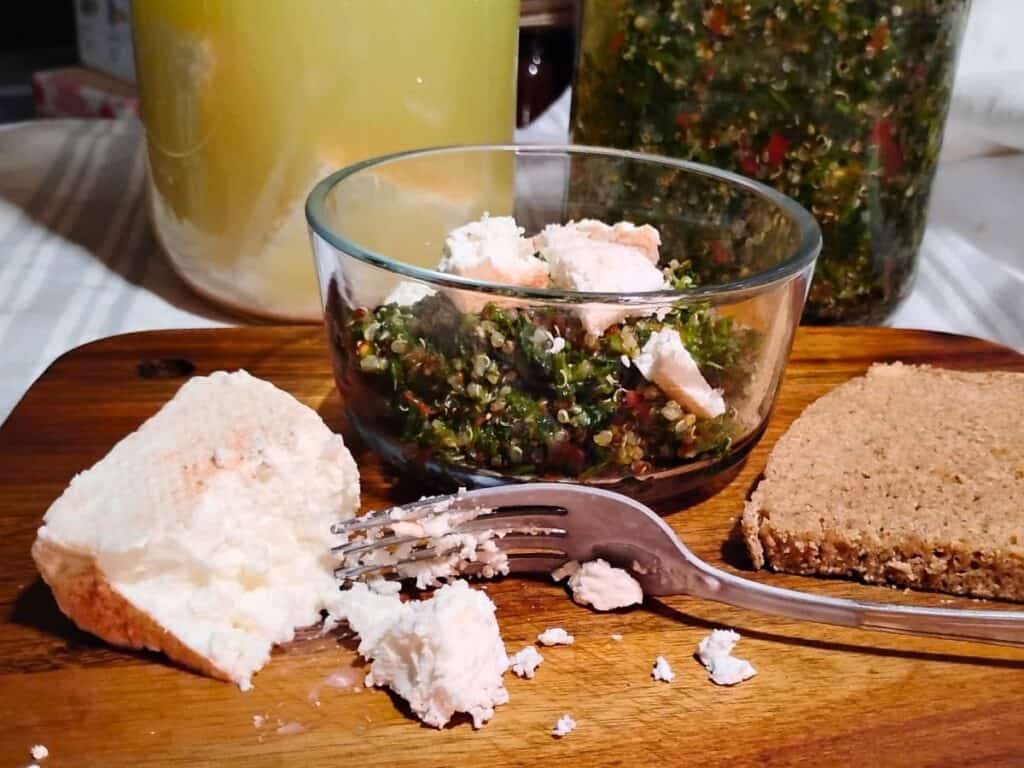
- Serve with more proteins to make it a full meal. Top with chicken, fish, shrimps, chick peas, black beans, grilled beef strips etc. I love adding some feta or soft clabber cheese, chevre, or quark cheese.
- Ok! Some say that the parsley should never be processed in a food processor. Others advocate it. I’ve done it either way. The food processor does help get the parsley chopped nice and small fast, but I prefer the texture of hand cut when I have the time! Don’t hesitate to include some of the more tender stems, but I’d pass on the tougher main stems. They are better used making a vegetable or bone broth.
How To Make Gluten-Free Tabouli Salad (Quinoa Tabbouleh) And How to Ferment Tabouli

Find links for equipment and ingredients at the end of this post.
Equipment
A large Strainer – to rinse the quinoa
A 2 quart pot – for cooking the quinoa
A large bowl – for mixing the salad
A food processor – optional. Use it if you prefer, but hand-cutting yields a better texture!
Cutting board & knife – a large cutting board and a long sharp knife works best or try an Ulu knife.
Measuring cup – I like a quart measuring container for the veggies and a smaller 1/4 and 1/3 cup measuring cup for the liquid ingredients.
Measuring Spoons – for the salt and pepper.
Spoon – spatula, fork or something else to stir with
Ingredients
I choose organic ingredients whenever possible. Today’s agriculture is filled with toxic pesticides, artificial, chemical fertilizers and genetically modified crops. It is my great desire to stay clear of these toxic ingredients and seek out regeneratively grown foods that are high in nutrient value and left as natural as possible, for the sake of health.
You’ll find the exact amounts for ingredients in the recipe card at the end of this post.

Quinoa seeds – These little seeds are power packs of nutrition. A plant that propagates by seed, stores all it’s energy in it’s seeds, to equip them with the power to bring forth strong, healthy new plants. We can get much nutritional value from adding seeds to our diet. Black quinoa is thought to have the most health benefits, but red and white quinoa are close second. I like the tri-color blends.
Water – We’ll need water for soaking the quinoa and for cooking it.

Parsley – The star of the tabouli! Parsley is loaded with health benefits. The best parsley to use for tabouleh is flat-leaf parsley. I love to plant ‘Einfacher Schnitt’ parsley, a German variety that’s easy to grow and easy to harvest. The name translates to ‘easy cut’ parsley, and it lives up to it’s name. Italian flat leaf parsley works great and will be easier to find. You can use curly parsley, but it is not ideal. Flat leaf parsley has better flavor.
Spearmint – Spearmint is the variety of mint that is used in traditional tabouli. It is a mild and slightly sweet mint, that adds a nice flavor to the dish. Avoid peppermint, but you can substitute apple mint, chocolate mint or another mild flavored mint. Do not substitute dried mint. Just omit the mint if you don’t have any.
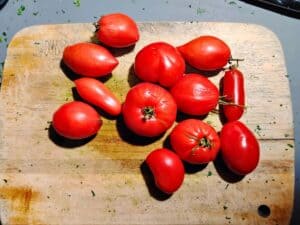
Tomatoes – As with all tomato dishes, sun-ripened, garden-fresh tomatoes are unbeatable. If you don’t grow your own, try a farmer’s market or farm stand, preferably an organic operation. I didn’t have anymore fresh tomatoes for my last batch, and so I used my home canned chunky tomatoes. It’s not as good as fresh and the texture is off, but the salad is still quite good. Just not as good as with fresh garden tomatoes.
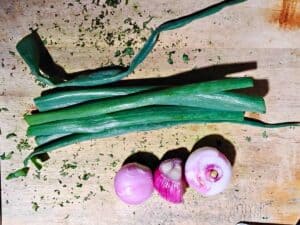
Green onions (scallions) or chopped red onions – Use what you have. I like it either way.
Garlic cloves – Garlic is not normally in traditional recipes, but it has to be in mine! Of course you can skip it, but in my salad it’s not optional.
Olive oil (omit when fermenting) – Olive oil is important for unlocking fat-solulable nutrients in this powerhouse salad, so do not omit it. But if you’re going to ferment the salad, skip it for now and add it later, after fermenting. It’s safer that way.
Lemon juice (fresh if possible) (omit when fermenting) – Fresh is by far superior, but you can use bottled in a pinch. When you ferment this tabouleh salad, you’ll end up with a tart salad without the extra tartness that lemon juice imparts, so I would skip the lemon juice for the fermented salad. Do add it to the fresh salad though. It adds vitamins and nutrients and a pleasant tartness.
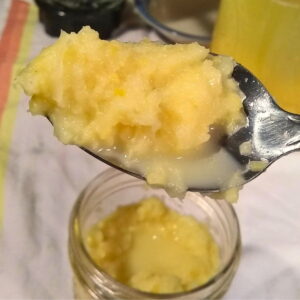
If you have fermented lemons, use a spoonful of the lemon paste, or a squeeze from a couple of fermented lemon slices. This will add some delicious lemon-oil flavor as well. This is in addition to the lemon juice.
Salt (increase when fermenting, see fermenting instructions below) – Use the amount of salt listed in the recipe card, but taste the salad before serving and adjust if necessary. Refer to the fermented instructions on how much salt to use for fermenting.
Pepper – Pepper helps with absorbance of nutrients, but it should always be freshly ground for the best result.
Optional:
Vinegar – or lemon juice. Just a dash for soaking the quinoa to help reduce phytic acid.
Coriander seeds – Optional, but very nice in this salad. I like to use the mortar and pestle to crush and grind them.
Red hot peppers (jalapeno, serrano) – I love a little kick in my dishes and I think it goes nicely with this salad. Just enough to notice, but not overpowering.
Cucumbers – Cucumbers are not in the traditional recipe, but they go very nicely with this salad. Chop a cucumber into small dice for a bit of crunch.
Hemp seeds – Not found in any recipe, but I love adding hemp seeds. Half a cup or more adds nice nuttiness and more nutrition to your tabouli salad.
Fermentation juice – This can help kickstart fermentation and cut down on salt. Use any juice you have from fermenting another vegetable. I like to use the brine from fermented lemons for a great lemon-oil flavor. The tabouli will ferment without this, but this will speed it up.
Instructions For Making Tabouli salad
Prep the Quinoa

Optional step: It’s best to soak the quinoa for several hours before cooking it to neutralize the phytic acid that locks up the nutrients in the seeds. Add a dash of vinegar for best results.
After soaking, catch the quinoa with a sieve and rinse the quinoa well until the water runs clear, to remove the bitter saponins.
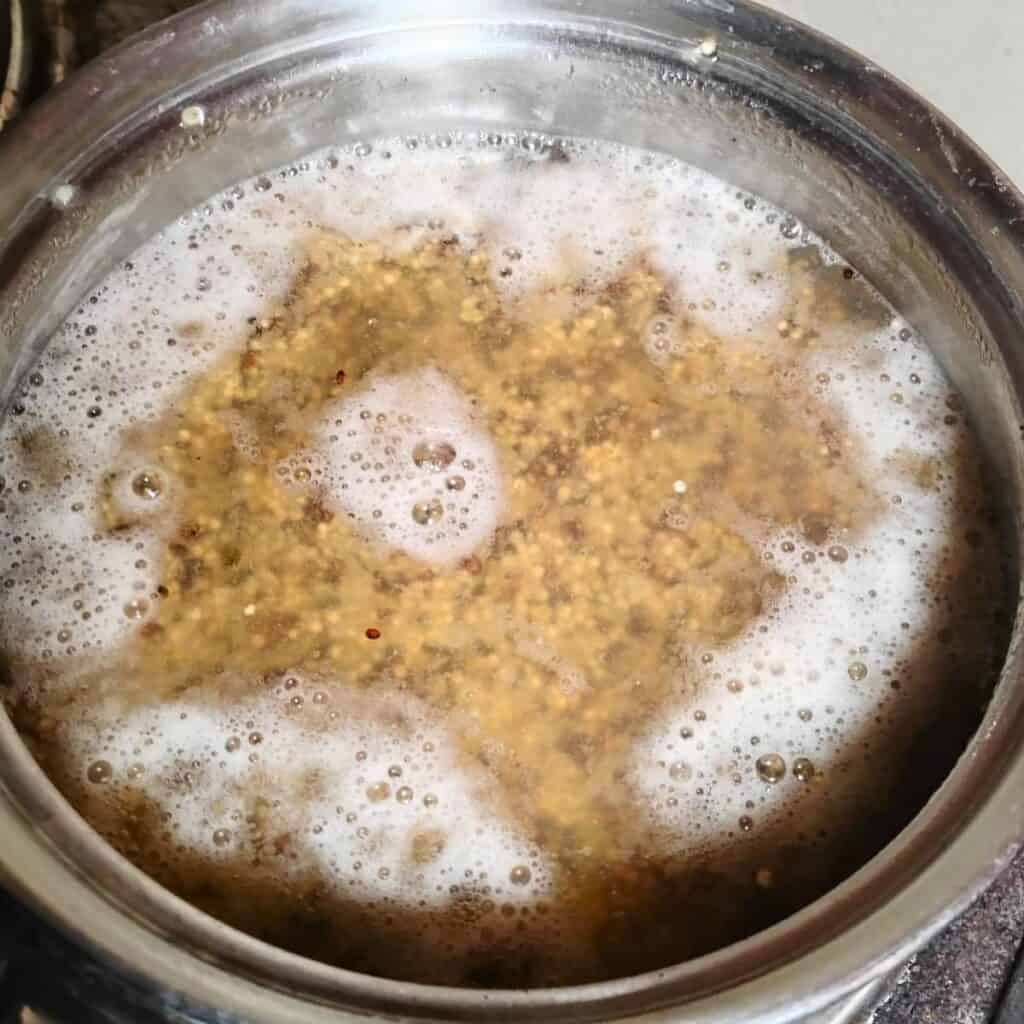
Add the quinoa to a pot with the 1¼ cups of water. If you didn’t soak the quinoa, use 1½ cups of water. Bring to a boil, reduce the heat and simmer for about 10 minutes on low. Take it off the heat but leave the lid on, and let it sit another 5-10 more minutes. Take off the lid, fluff with a fork and let cool.
Prepare The Brine
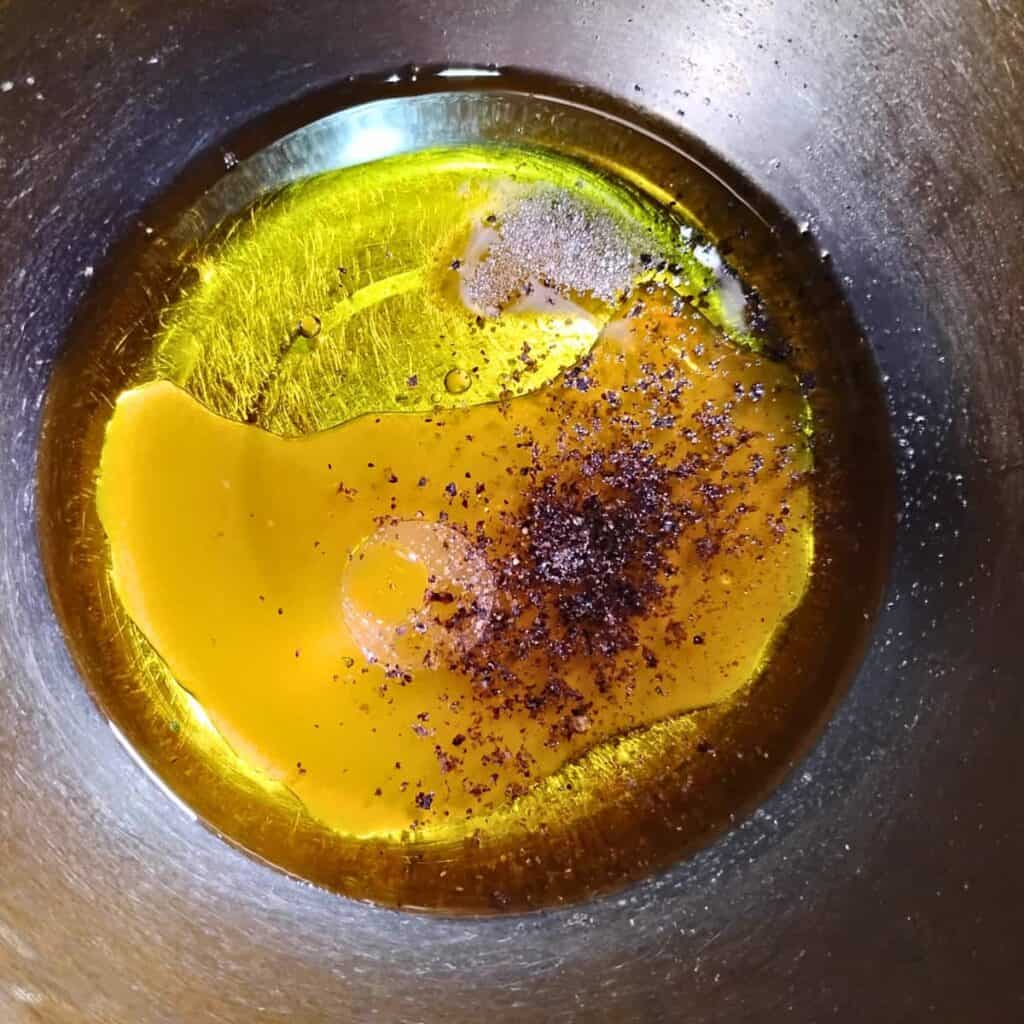
Add the olive oil and lemon juice to the large bowl.
Crush the garlic cloves with a garlic press or chop finely and crush with the flat of your knife and add it to the olive oil.
Sprinkle the salt, pepper, and coriander seeds over it and mix well.
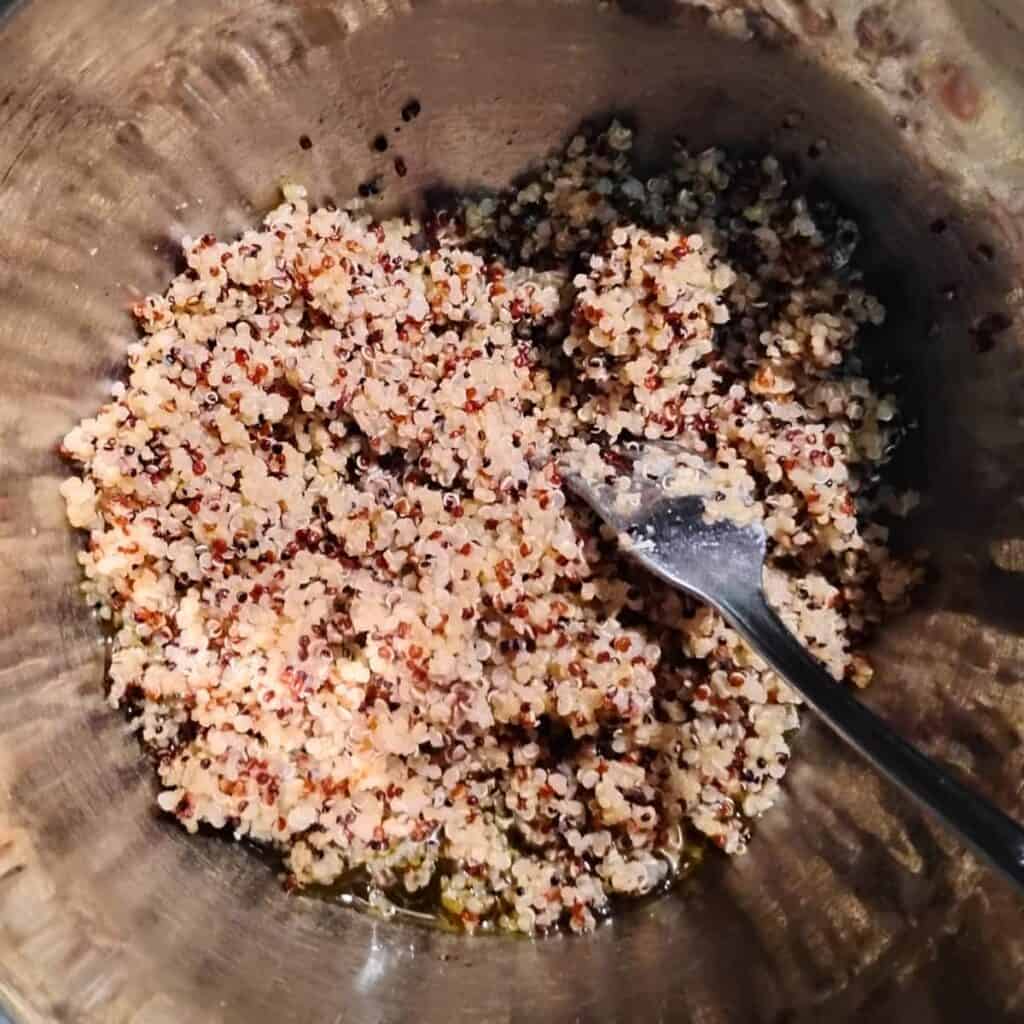
Add the quinoa, stir, and let it soak up the brine for a few minutes while you prep the vegetables.
Prepare the veggies
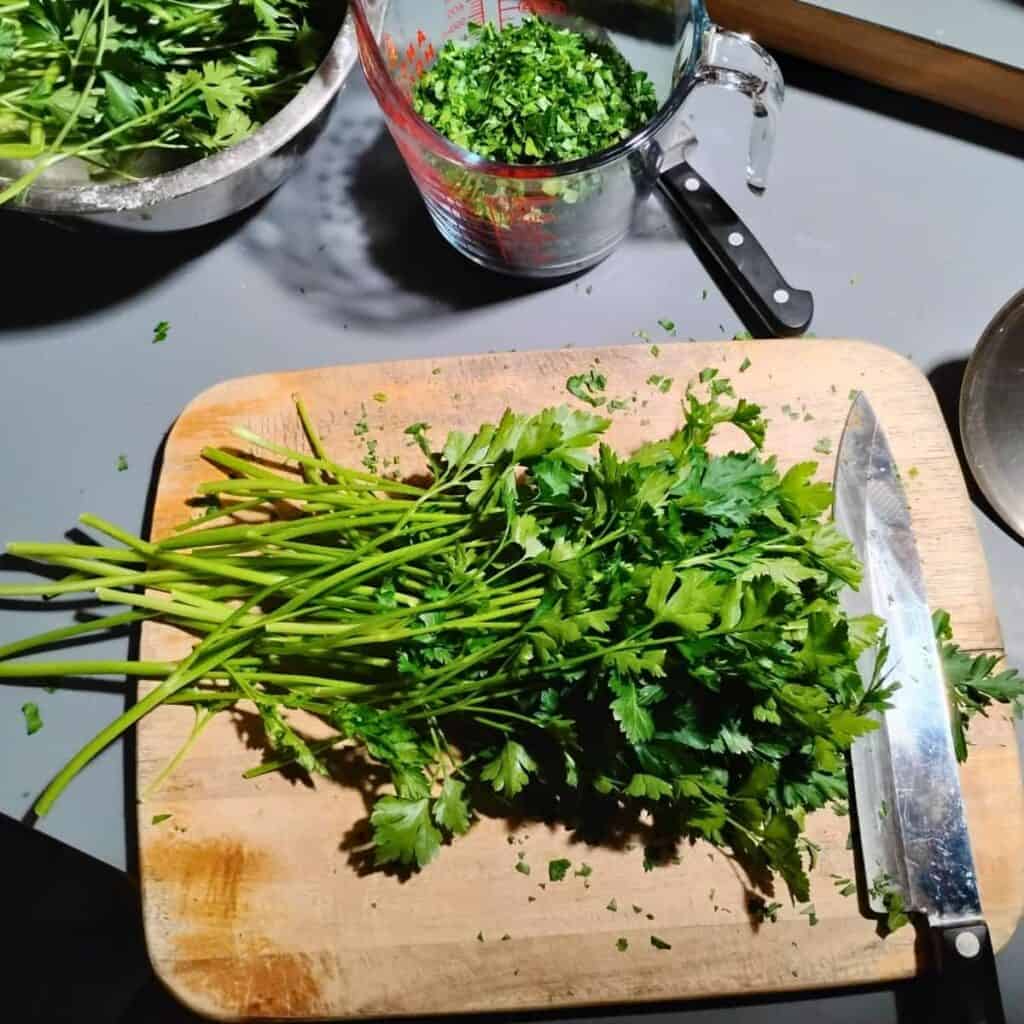
Using a knife or food processor, finely chop the parsley and dump into the large bowl over the quinoa.
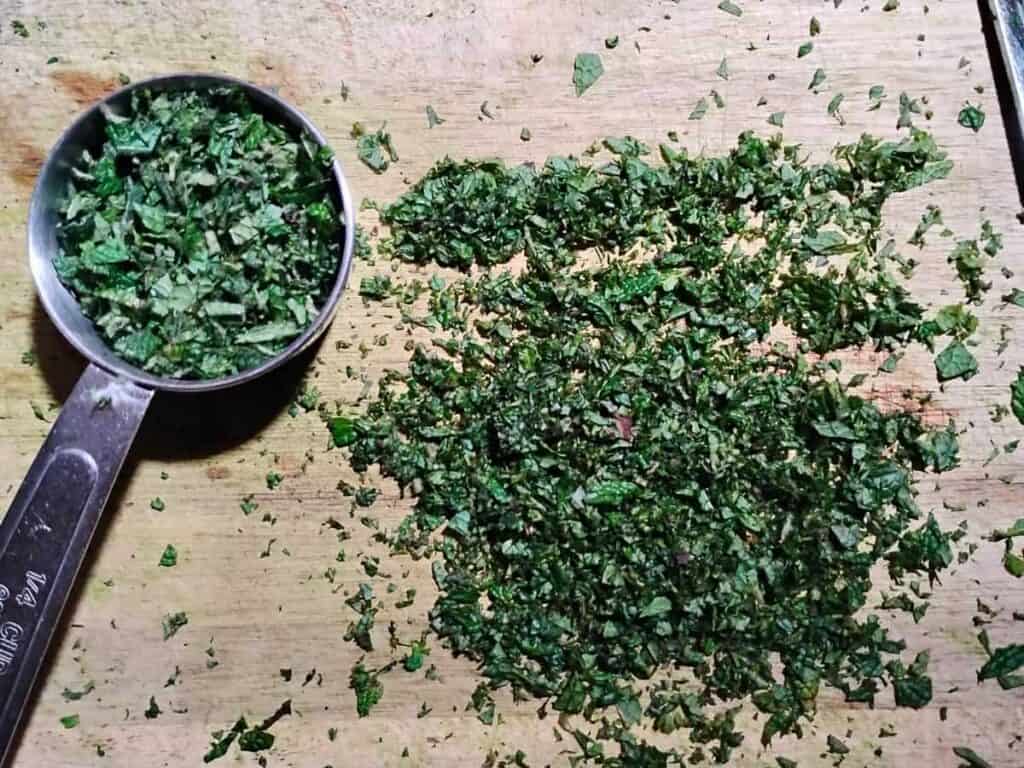
Finely chop the mint and add to the parsley.
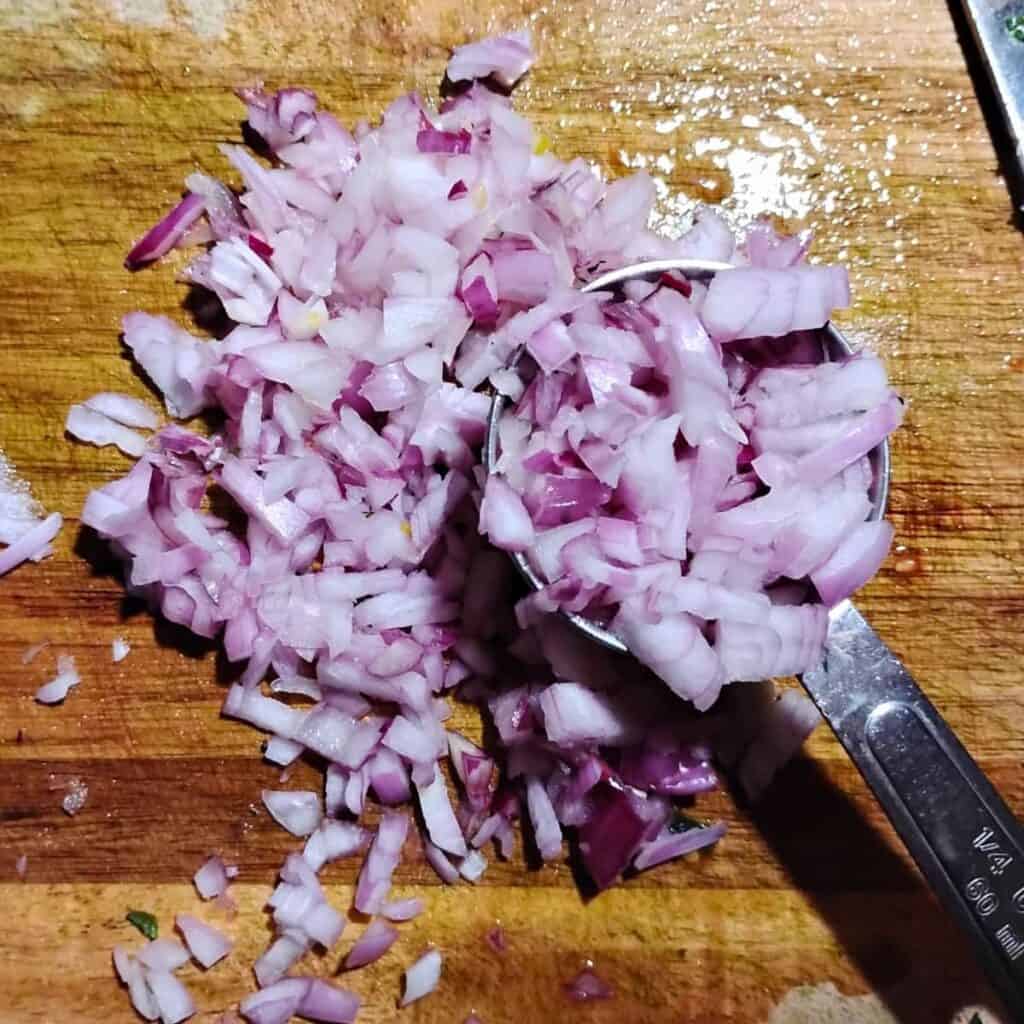
Finely chop the onions, add to the parsley.
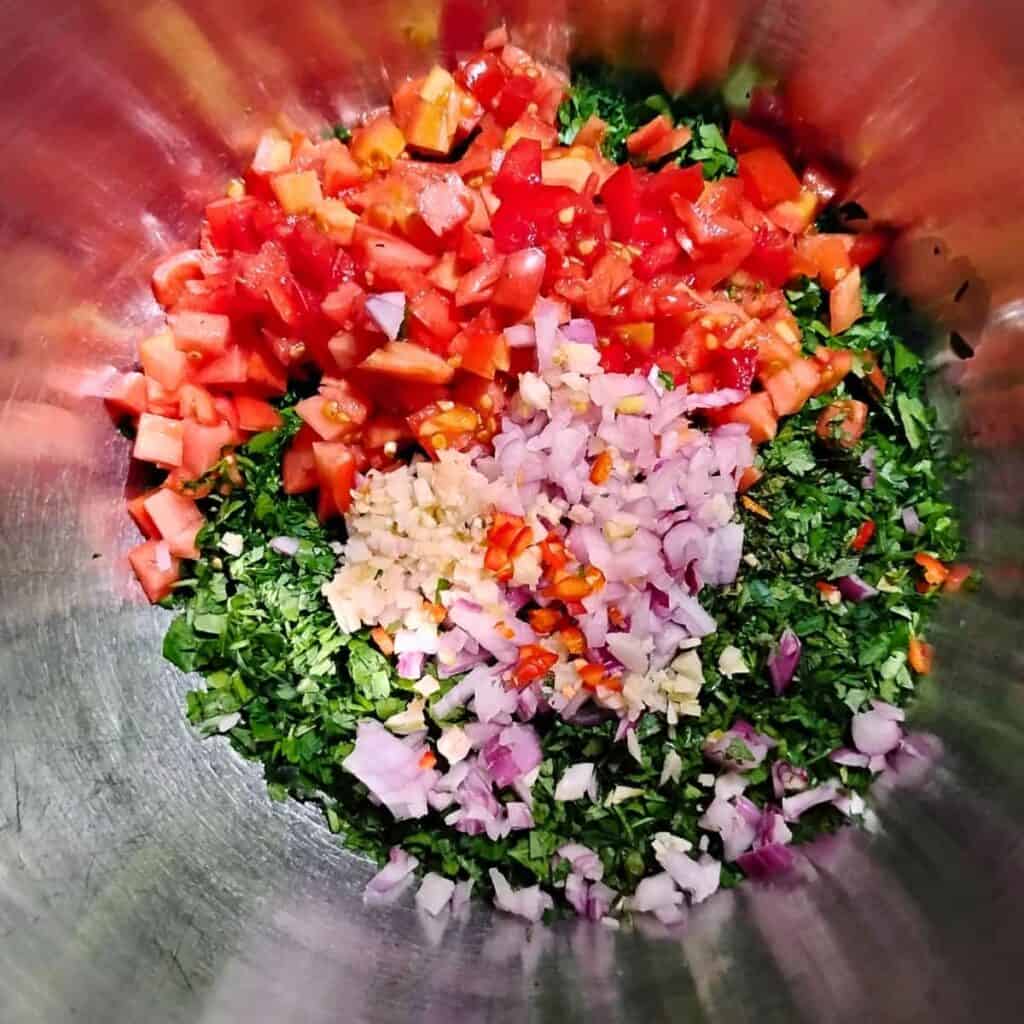
Chop the Tomatoes and add them too.
Add optional hemp seeds, chopped cucumbers, and diced hot peppers if you’re using them.
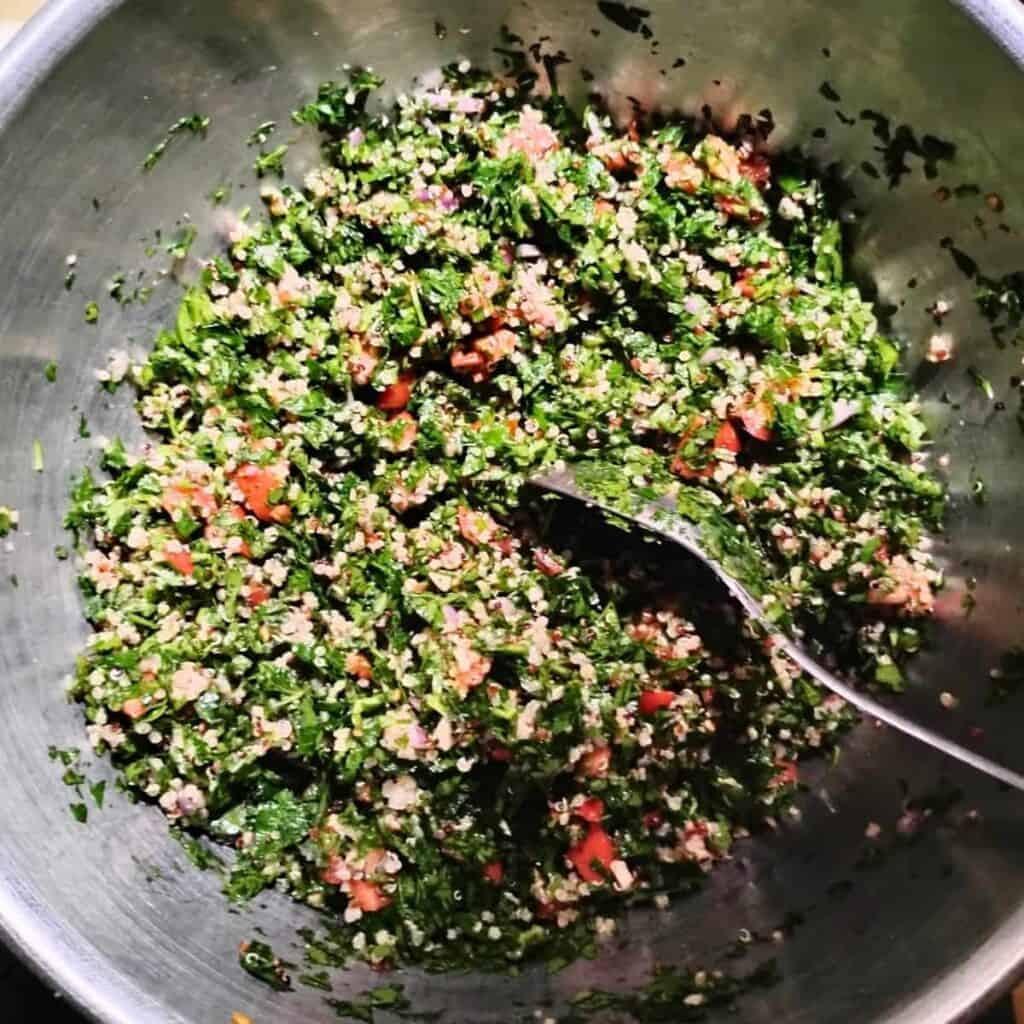
Toss to combine all ingredients well.
Serve immediately or let it sit in the fridge overnight to improve the flavor before serving.
Fermentation instructions:

Prepare the recipe as written, except do not add the lemon juice, olive oil and salt.
The olive oil gets added after it is done fermenting, or right at serving.
The salt gets increased to 3 teaspoons. So add 3 teaspoons of salt in place of the one teaspoon.
Optional: Add ¼ cup of fermentation juice from a previous ferment and decrease the salt to 1½ teaspoons.
The lemon juice will make the ferment too tart, so don’t add it. However, if you have fermented lemon paste, you can add a couple of teaspoons of that for a great flavor and add a quarter cup of the fermented lemon brine to kick-start fermentation and reduce added salt as mentioned above. You can use any other fermented brine instead of the fermented lemon brine.
Toss everything well, let it sit in the bowl for about half an hour.
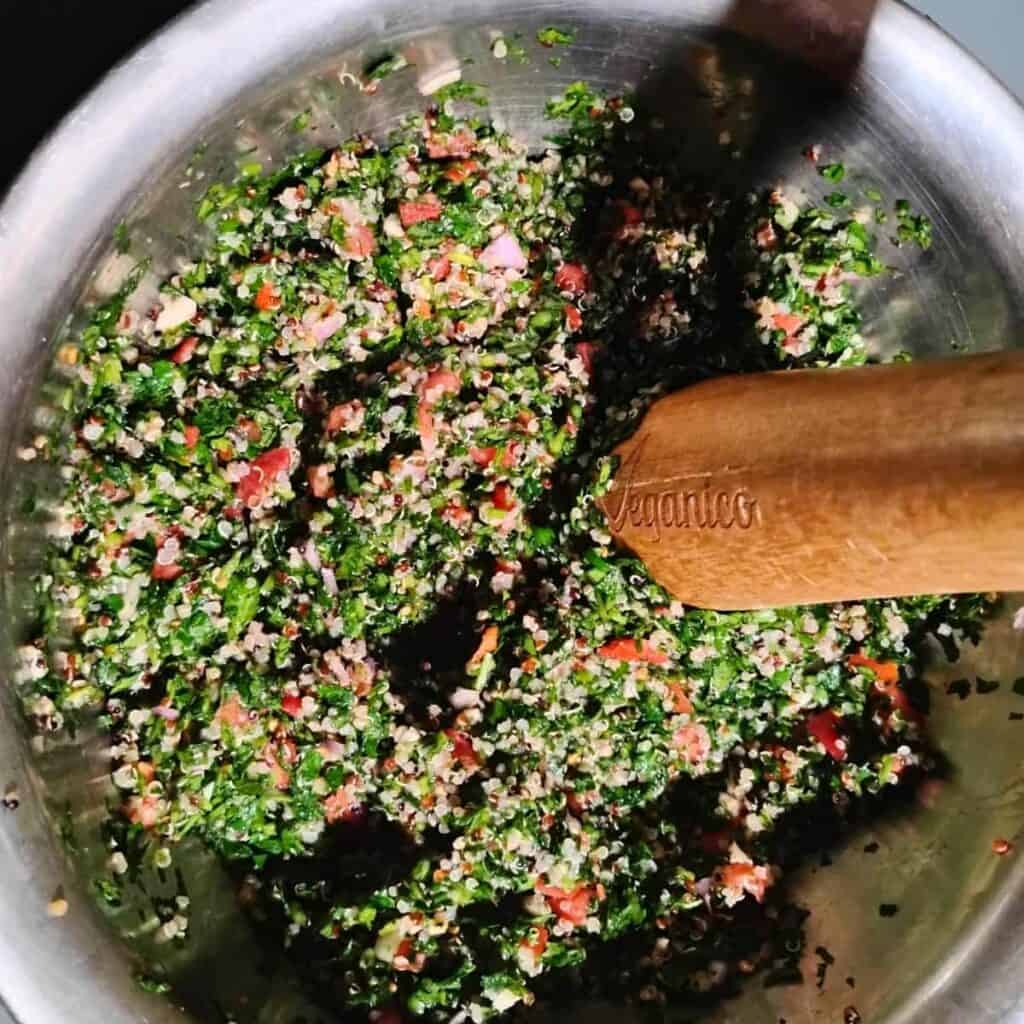
After that, stomp with a pickle packer or a sturdy glass mason jar to coax out the juices.

Pack into a half gallon canning jar and pack it down well. Add water if necessary to just barely cover the ingredients. Tightly close the lid and put it in a warm spot to ferment for 3-4 days. After 2 days see if it needs burping (unscrew the lid by half a turn and listen for gasses escaping. Tighten back up and do that again a day later. You don’t need to do that if you use a fermentation top or with a Fido flip top jar, it self-vents.
After 4 days, taste it. If it tastes fermented and starts to get sour, you can place it in the fridge.
For long storage, I like to pack the salad into a quart jar to almost the top rim, to get rid of the airspace and reduce the chance for mold to grow on top. Then I pour a little olive oil over the top to keep out oxygen while it’s aging in the fridge. But don’t add the olive oil if you’re keeping it in the cellar.
Enjoy now or let it age for a while, and be sure to keep it well sealed. Check it occasionally.
This should keep for several months to a year in the fridge or cellar.
You can find more detailed fermentation instructions in my post on fermenting vegetables.
Storage Tips
Store the fresh tabouli in the refrigerator for up to 5 days.
The fermented tabouli can be stored in the fridge or cellar for up to a year.
Serving Suggestions
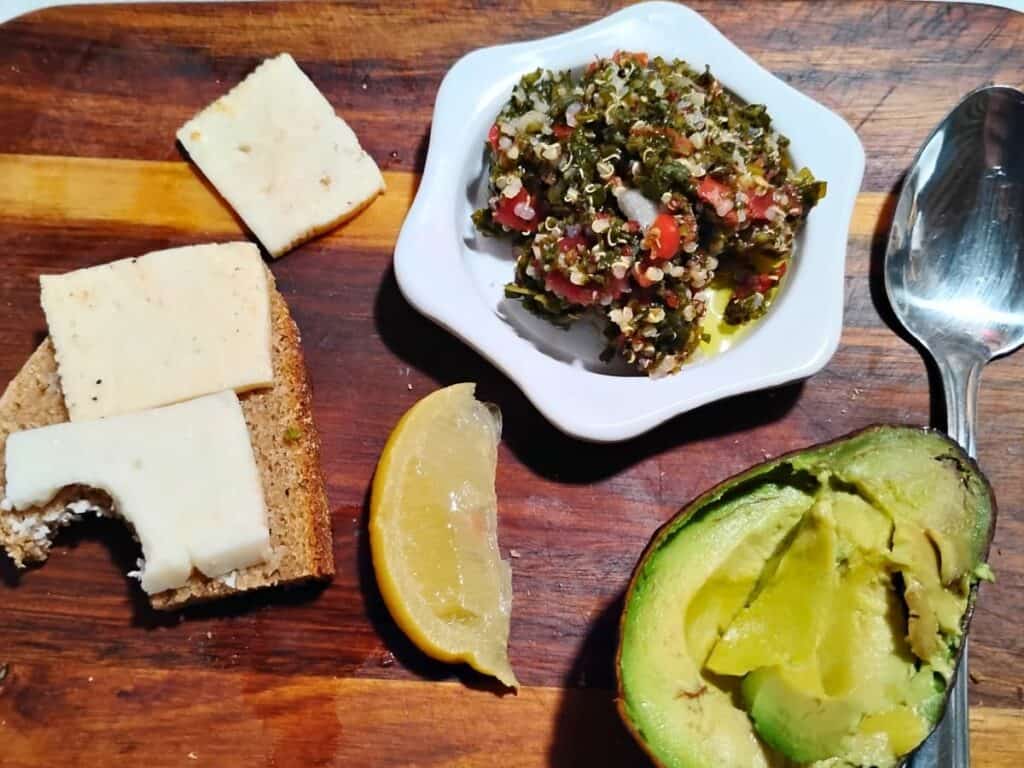
Serve a bit of fermented tabouli with any meal for better digestion and a serious nutrient boost.
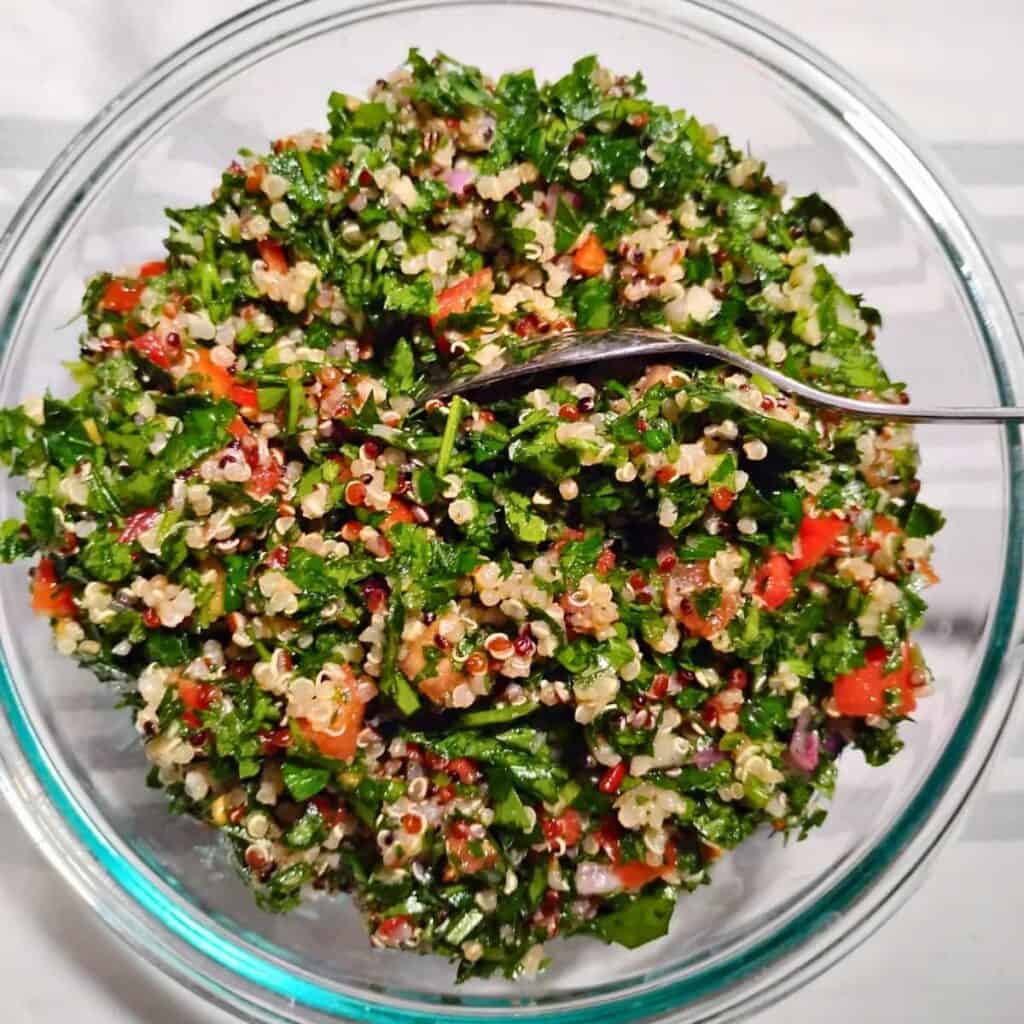
Tabouli Salad is a great side dish or light lunch.
Serve on top of grilled or poached fish. Especially good with some avocado slices and a little extra lemon.
Use as the base for a bowl meal and top with black beans or chick peas, marinated chicken strips, poached egg, chunks of queso fresco, tempeh, or other protein.

Serve as a meal salad with some avocado, olives, and feta cheese, quark cheese, or soft chevre cheese and a slice of moist, dense, no-knead rye bread.
Pile on a pita bread with some hummus.
Serve with ground beef in a taco.
Your Questions Answered
Is tabouleh salad healthy?
It is very healthy! Tabouli salad is a nutritious powerhouse and full of health promoting compounds.
Can you freeze tabouli salad?
No, tabouleh salad will turn to mush if it freezes.
What is the best way to preserve tabouli salad?
The only way to preserve tabouli salad is by fermenting it. You’ll find the instructions here. The flavor will change, but it will still be delicious. If properly fermented, it can keep up to a year in the fridge or cellar, but it will become more tart over time.
How long is tabouli salad good for?
If you keep it in the refrigerator, the fresh tabouli will be good for about 5 days. For longer storage, it needs to be fermented. Then it will keep a year in the fridge or cellar.
Where did tabouli salad originate?
Tabouli originated in the mountains of Lebanon and Syria. From there is spread slowly and is now popular worldwide.
What goes into tabouli salad?
The emphasis in tabouli is on fresh local ingredients in it’s native countries. The main ingredient in most recipes is fresh parsley. To this, mint is added as well as tomatoes, onion, lemon juice and olive oil. For seasoning, salt and pepper is added.
What do you eat tabouli salad with?
It can be a meal on its own if it is made with quinoa, a complete protein ingredient. But it is often part of a mezze platter in the Mediterranean, alongside stuffed grape leaves, olives, feta cheese, hummus, and other small appetizers.
Tabouli is also delicious on sandwiches, in a pita pocket with hummus or meat, as a side dish with BBQ meats or roasted vegetables.
Enjoy this Gluten-Free Tabouli Salad (Quinoa Tabbouleh) And Fermented Tabouli
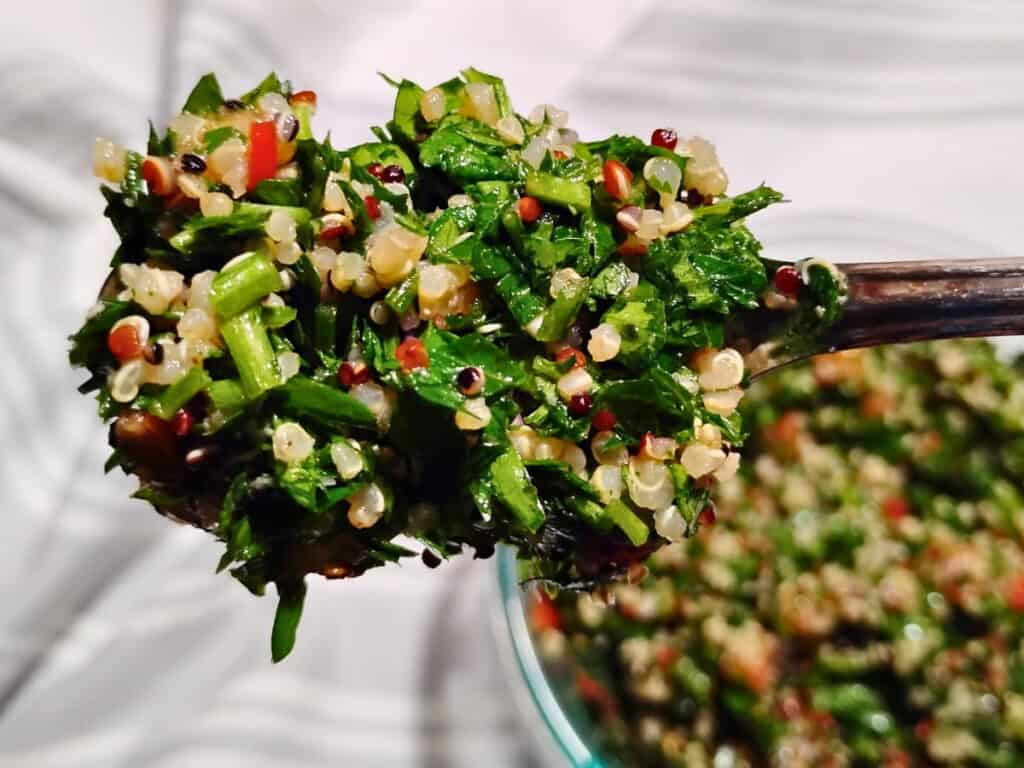
I hope you get to make this delicious salad and that you love it as much as I do. It’s a powerhouse for health and a great way to increase your family’s nutrition intake. It’s perfect for lunches, as a side salad or as a meal with extra protein, and it’s delicious on sandwiches. Fermented Tabouli Salad is even more nutritious and contains probiotics. Make it often and enjoy this fantastic tabouli salad!
Have you made this recipe? I’d love to get your feedback and your ⭐⭐⭐⭐⭐ star rating! And I’d love to hear your favorite ways to use quinoa. And please don’t hesitate to ask in the comments if you have any questions!
Join the Food For Life Garden Community for more great recipes and homestead tips and ideas. I’m always adding new content. Don’t miss any new posts and learn more about my off-grid farm life.
Other Recipes You Might Like
Lacto Fermented Sauerkraut – Famously healthy and so tasty! Make your own from scratch.
Zucchini Ikra, A Vegetable Salad – This fantastic, versatile dish from Eastern Europe can be a delicious chunky salad, salsa, relish, topping, or creamy dip, and more. And it tastes awesome!
Creamy Cucumber Salad – This is a super delicious summer salad. A must for cucumber season, but it’s great any time if you can get cucumbers!
Fermented Salsa – Delicious zesty tomato salsa. It’s summer in a jar!
Fermented Coleslaw – A cabbage and roots medley with fabulous coloring and awesome flavor. Packs nutritious punch and probiotic diversity.
No-fail Homemade Mayonnaise – Make mayonnaise from scratch with this easy recipe, which includes a fermenting option to preserve it for long-term storage.
Sourdough Seeded Rye Bread With Spelt – If you are a fan of rye bread, you need to try this awesome seeded rye. Loaded with whole grain berries and seeds, awesome with cheese and great with tabouli salad.
Fermented Garlic Scapes – Preserve your extra garlic scapes and gain a lot of health benefits by fermenting them. They make delicious, tangy pickles with lots of uses.
Fermented Garlic – Lacto-fermented garlic paste is kind of a special food. It’s the ultimate convenience food and health supplement. But besides that, it gets better as it ages. Just like a fine wine.
Fermented Onions – Keep some onions ready to use on Sandwiches or to put on your salads. Zesty or plain, onions taste great when fermented, and you’ll get the benefits of probiotics.
Fermented Cucumber Pickles – How to ferment your excess of cucumbers to enjoy all year long and with the added benefit of improving your gut health with probiotics.
Fermented vegetables – How to ferment your summer’s bounty to enjoy it all year long and with the added benefit of improving your gut health with probiotics. Learn the basic skill of fermenting any kinds of vegetables, learn about the benefits of fermentation and get the science behind it too.
Recipes for Garlic Scapes and Bolted Onion Greens – There is much you can do with garlic scapes and bolted onions. I’m sharing my favorite ways to use them and how to make a delicious pesto sauce.
Pin This Recipe For Later
Shop This Post Resources And Shopping List
Food processor
Mason jars
Glass Measuring Containers
2 quart pot
Knife
Cutting Board
Fermentation equipment (optional)
Bormioli Fido jars
Fermentation lid
Airlock
Glass fermentation weight
Pickle packer
Recommended Ingredients
Redmond’s Real Salt
Himalayan pink salt
Celtic sea salt
Tri-color Quinoa
Hemp seeds
Garden Seeds
Flat leaf Italian parsley on Amazon
Flat leaf parsley at Trueleaf
Red quinoa seeds

Gluten-Free Tabouli Salad (Quinoa Tabbouleh) And Fermented Tabouli Recipe
Equipment
- A large Strainer – to rinse the quinoa
- A 2 quart pot – for cooking the quinoa
- A large bowl – for mixing the salad
- A food processor – optional (I prefer hand cutting)
- Cutting board & knife
- Measuring cups and spoons
- Quart sized measuring container
- Large spoon
Ingredients
- ¾ cup Quinoa seeds
- Water – 2 cups for soaking and 1¼ – 1½ cups for cooking
- 3 bunches Parsley – approx. 3 cups chopped and packed down
- ¼ cup Spearmint – or more to preference.
- 4 Tomatoes
- 2 Green onions (scallions) – or ¼ cup chopped onions
- 2 large Garlic cloves
- ⅓ cup Olive oil omit when fermenting
- ¼ cup Lemon juice, fresh squeezed (omit when fermenting), bottled is ok in a pinch
- 1 tsp Salt increase when fermenting, see fermentation notes
- ½ tsp Pepper
Optional:
- 1-2 spicy, hot jalapenos or serranos
- 1 tsp crushed coriander seeds
- 1 Cucumber, chopped
- ½ cup Hemp seeds – or to taste
- ¼ cup Fermentation brine (juice) of any vegetable – use this as a kickstarter for fermentation. But it is not necessary. See fermentation instructions below.
Instructions
Prep the Quinoa
- Optional step: It's best to soak the quinoa for 2-12 hours before cooking, to neutralize the phytic acid that locks up the nutrients in the seeds.
- After soaking, catch the quinoa with a strainer.
- Rinse the quinoa in the strainer very well until the water runs clear.
- Add the quinoa to a pot with the 1¼ cups of water. If you didn't soak the quinoa, use 1½ cups of water. Bring to a boil, reduce the heat and simmer for about 10 minutes on low. Take it off the heat but leave the lid on, and let it sit another 5-10 more minutes. Take off the lid, fluff with a fork and let cool completely.
Prepare The Dressing
- Add the olive oil and lemon juice to the large bowl.
- Crush the garlic cloves with a garlic press or chop finely and crush with the flat of your knife and add it to the olive oil.
- Sprinkle the salt, pepper, and coriander seeds over it and mix well.
- Add the quinoa, stir, and let it soak up the brine for a few minutes while you prep the vegetables.
Prepare the veggies
- Using a knife or food processor, finely chop the parsley and dump into the large bowl with the quinoa.
- Finely chop the mint and add to the parsley.Finely chop the onions, add to the parsley.
- Finely chop the mint and add it to the parsley.
- Finely chop the onion, and add it to the parsley
- Chop the Tomatoes and add them too.
- Add optional hemp seeds, chopped cucumbers, diced hot peppers if you’re using them.
- Toss to combine all ingredients well.
- Serve now or let it meld in the fridge overnight to improve the flavor before serving.
Fermentation instructions:
- Prepare the recipe as written above, except do not add the lemon juice, olive oil and salt.
- The olive oil gets added after it is done fermenting, or right before serving.
- The salt gets increased to 3 teaspoons. So add 3 teaspoons of salt in place of the one teaspoon.Optional: Add ¼ cup of fermentation juice from a previous ferment and decrease the salt to 1½ teaspoons. The lemon juice will make the ferment too tart, so don’t add it. However, if you have fermented lemon paste, you can add a couple of teaspoons of that for a great flavor and add a quarter cup of the fermented lemon brine to kick-start fermentation and reduce added salt as mentioned above. You can use any other fermented brine instead of the fermented lemon brine.
- Toss everything well, let it sit in the bowl for about half an hour.
- After that, stomp with a pickle packer or a sturdy glass mason jar to coax out the juices and pack into a half gallon canning jar. Add water if necessary to just barely cover the ingredients.
- Tightly close the lid and put it in a warm spot to ferment for 3-4 days.
- After 2 days see if it needs burping (unscrew the lid by half a turn and listen for gasses escaping. Tighten back up and do that again a day later.
- After 4 days, taste it. If it tastes fermented and starts to get sour, you can place it in the fridge. For long storage, I like to pack the salad into a quart jar to almost the top rim, to get rid of the airspace and reduce the chance for mold to grow on top. Then I pour a little olive oil over the top to keep out oxygen while it's aging in the fridge. Don't add the olive oil if you're keeping it in the cellar. Enjoy now or let it age for a while, and be sure to keep it well sealed. This should keep for several months to a year in the fridge or cellar. You can find more detailed fermentation instructions in my post on fermenting vegetables.
Storage
- Store the fresh tabouli in the refrigerator for up to 5 days. The fermented tabouli can be stored in the fridge or cellar for up to a year.
Notes
Tips And Substitutions For The Best Gluten-Free Tabouli Salad
- You can, of course, use fine bulgur or coarse bulgur, the original grain, instead of quinoa. Just soak in hot water overnight, drain well and add.
- Quinoa is milder than amaranth, but amaranth is a great substitute for quinoa if you are already growing it. Lambs quarters will also work. A good reason to embrace your weeds other than using them for a spinach substitute. And btw, quinoa leaves are used in place of spinach where ever it grows.
- Mint can be omitted if you can’t get any fresh. It adds extra flavor, but I have made tabouli many times without it and it’s still delicious. Do not substitute dried mint.
- I like to sneak in a hot pepper or two. Because that’s what I always do. Diced bits of red jalapeno or serrano work great.
- This is best made a day ahead to give the flavors a chance to meld.
- Serve with more proteins to make it a full meal. Top with chicken, fish, shrimps, chick peas, black beans, grilled beef strips etc. I love adding some feta or soft clabber cheese, chevre, or quark cheese.
- Ok! Some say that the parsley should never be processed in a food processor. Others advocate it. I’ve done it either way. The food processor does help get the parsley chopped nice and small fast, but I prefer the texture of hand cut, hands down! Don’t hesitate to include some of the more tender stems, but I’d pass on the tougher main stems. They are better used making a vegetable or bone broth.
This has to be the most nutritious salad ever. It’s brimming with vitamins, minerals, antioxidants and more. Ferment it for even greater health benefits. And did I mention that it tastes fantastic? You’ve got to try this. Ask me your questions right here and I’ll answer as soon as I’m able.
This recipe is golden! Tabouli is one of our fav’s & I love that you included how to ferment. This would be one of those perfect make-ahead camping meals too!
Oh, I agree! I love that this keeps for a few days unlike a lettuce based salad. And everything tastes better when you’re camping too!
I love the fermented option! This looks so good and healthy! I love it!
Hey Mara, thank you for your kind comment. Really glad that you like it!
I love eating quinoa but have never heard of adding spearmint to it…Definitely adding this to our sides for the summer once the garden is going again!
That’s great, I hope you’ll love this. I’m missing my garden can’t wait for it all to come back to life again!
Wow, this recipe is amazing! I love all the ingredients and that you provide an option to ferment it. I am always trying to get more fermented foods in my diet and your recipes are fantastic. Also, I had never thought to grow my own quinoa.. what a great idea!
Thank you for sharing your thoughts! I appreciate the feedback!
Love this and so excited because it is gluten free AND I can have it ready to put in lunches during the week! Delish!!! Thank you 🙂
Hey Peggy! I’m glad you like this and that this gluten-free option can work for you!
I have always wondered what tabbouleh was, thank you for sharing!
You’re welcome!
This looks delicious! And fermented!?! Woah! I love gut-friendly recipes like this! I have a bunch of parsley in my garden and never thought of making Tabbouleh. Thanks so much for sharing!
You’re welcome, Kelly! Glad you like this!
I loooooove this recipe!! And had no idea it could be fermented so that’s a game changer and i will be saving this post to refer back to when I have time to make it again!
That’s awesome, Kayla. I’m always happy to have you visit again!
This is one of my favorite flavor combinations, and I can’t wait to try fermenting it. Thank you fr the detailed instructions!
You’re welcome, Jamie! I’m excited you want to try fermenting it!
Ooooh, so yummy! I’ve been trying to add more healthy whole grains to my diet. This is the perfect addition!
Glad you like this, Laura!
Amazing! Thanks for sharing. I love a good quinoa recipe!